


Background
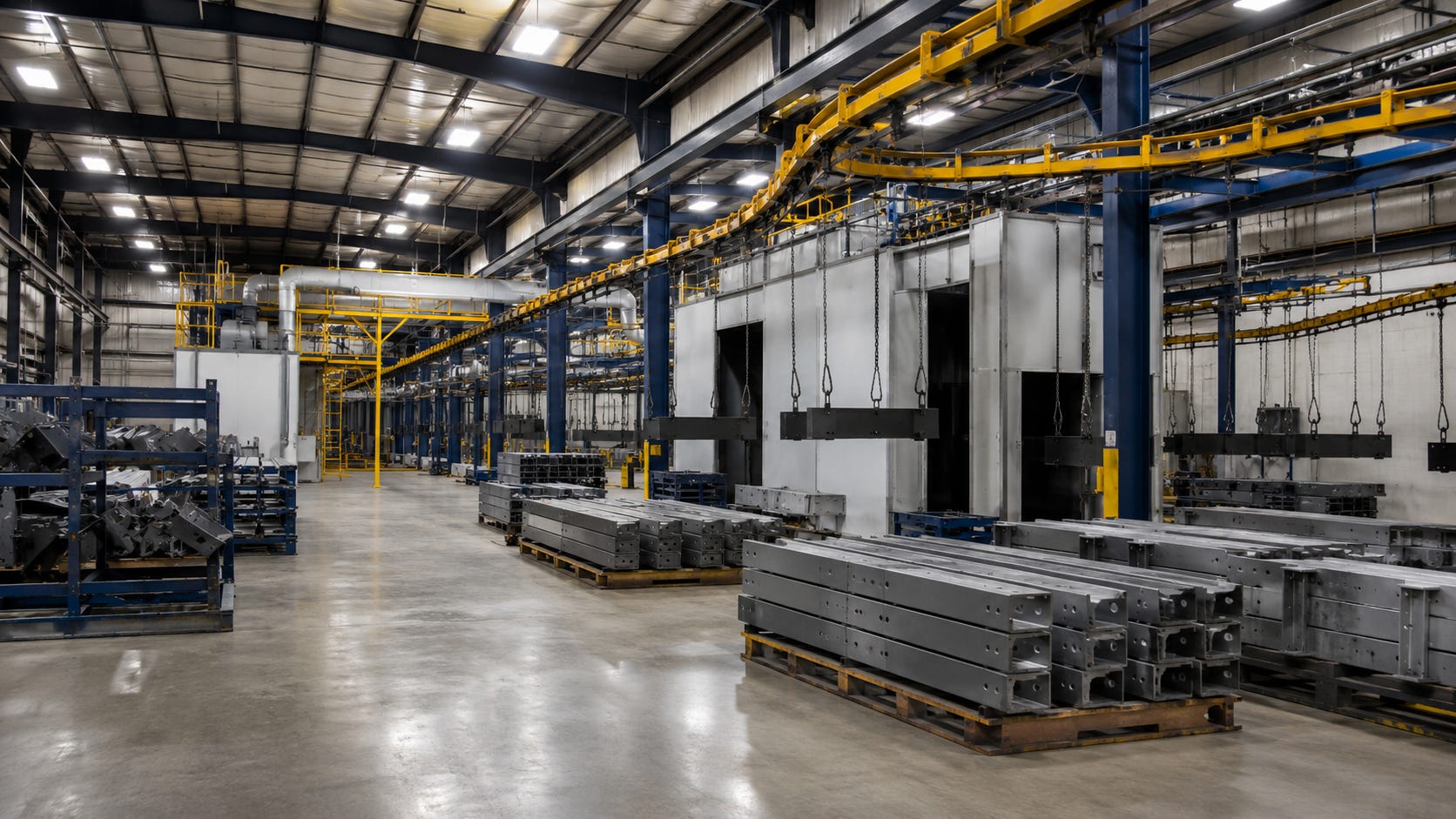
Gordie Howe spent twenty-eight years building Howe Industrial Coatings Ltd., a specialty industrial coatings business serving heavy equipment manufacturers across Ontario and Michigan. By 2024, the business generated $42M in revenue and $8.2M in normalized EBITDA, with three production facilities, 87 employees, and long-term supply contracts with eleven OEM customers.
Gordie, age 64, had decided to exit. His CBV-certified valuator delivered a Fair Market Value report showing an enterprise value range of $36M to $41M, using a 4.5x to 5x EBITDA multiple. Gordie’s first instinct was to accept the highest informal offer from a private equity firm at $40M. His M&A advisor stopped him cold.
“Gordie, you have not even spoken to the right buyer yet. FMV is your floor, not your ceiling.”
The Three Buyer Conversations
Over six weeks, Gordie’s advisor orchestrated parallel conversations with three distinct buyer categories, each evaluating the business through completely different math.
Financial Buyer Conversation: Sentinel Capital Partners
Sentinel was a mid-market private equity firm with three portfolio companies in industrial services. Their model was textbook financial buyer logic.
Base offer: $39M, representing 4.75x EBITDA
Payment structure: 70% cash at closing, 30% earnout over three years tied to EBITDA growth
Premium triggers identified: Sentinel offered to move to $43M if Gordie could prove the operational systems were truly transferable to a new operator. Their concern was key-person dependency.
Gordie’s response was to spend two weeks documenting his operating manual, customer relationship transition protocols, and his General Manager’s three-year track record running daily operations. The proof of transferability moved Sentinel’s offer to $43.5M.
Strategic Buyer Conversation: Continental Coatings Group
Continental was a publicly listed coatings consolidator with twelve facilities across North America but zero Ontario presence. Their math was fundamentally different.
Base offer: $44M, representing 5.4x EBITDA
Payment structure: 85% cash at closing, 15% earnout tied to integration milestones
Premium triggers identified: Continental could capture roughly $2.1M in annual cost synergies through centralized procurement, eliminate $400K in duplicate overhead, and prevent a competitor from acquiring the Ontario footprint.
Gordie’s advisor packaged these synergies into a quantified presentation. Continental’s revised offer reached $47M, with 85% cash at closing.
Management Buyout Conversation: The Internal Team
Gordie’s General Manager, CFO, and Operations Director approached him with a Management Buyout proposal. Their math was constrained by financing capacity.
Base offer: $35M, reflecting limited financing access
Payment structure: 30% cash, 50% seller note over seven years at 6% interest, 20% earnout over five years
Premium triggers identified: The team offered to increase to $38M if Gordie would stay on as Chairman for two years and provide attractive seller financing terms.
The Decision
The three offers looked like this on paper:
Strategic (Continental): $47M, 85% cash at closing
Financial (Sentinel): $43.5M, 70% cash at closing
Management (Internal): $38M, 30% cash at closing
Gordie’s actual cash at closing comparison:
Continental: $39.95M cash immediately
Sentinel: $30.45M cash immediately
Management: $11.4M cash immediately
Gordie selected the Continental offer at $47M. Final closed price was $46.5M after due diligence adjustments, $5.5M above the highest end of his original CBV Fair Market Value range. The strategic buyer’s synergy math justified a premium that no financial buyer could match, and the high cash component eliminated execution risk.
The Lesson
Gordie did not increase the value of his business during those six weeks. He increased the buyer’s willingness to pay by matching his presentation to the buyer category most compelled to pay premium pricing. The same business, same EBITDA, same operations, captured a 13% premium above FMV simply through proper buyer identification and category-specific positioning.
Deloitte M&A research consistently shows that strategic buyers pay 20% to 40% premiums over financial buyers when synergies are quantified and presented properly. Gordie captured the lower end of that range, $7M of additional value, by simply talking to the right buyer.
⚖️ EDUCATIONAL DISCLAIMER
This case study is entirely fictional and created for educational purposes only. The character “Gordie Howe” used in this case study is a fictional business owner created using the name of a famous NHL hockey player from the 1960s and 1970s. This case has no connection to the actual NHL legend Gordie Howe, his family, his estate, or any of his actual business ventures. The hockey player’s name is used solely for memorable narrative purposes in educational content.
All financial figures, company names, transactions, and business circumstances are fabricated for instructional value. This material is drawn from collective industry experience and does not represent any specific actual transaction. This guide provides information only, not professional advice. Consult qualified advisors for your specific situation. Neither the author nor YBAWS! accepts liability for actions based on this content.
© 2026 YBAWS! All rights reserved.
