

Background
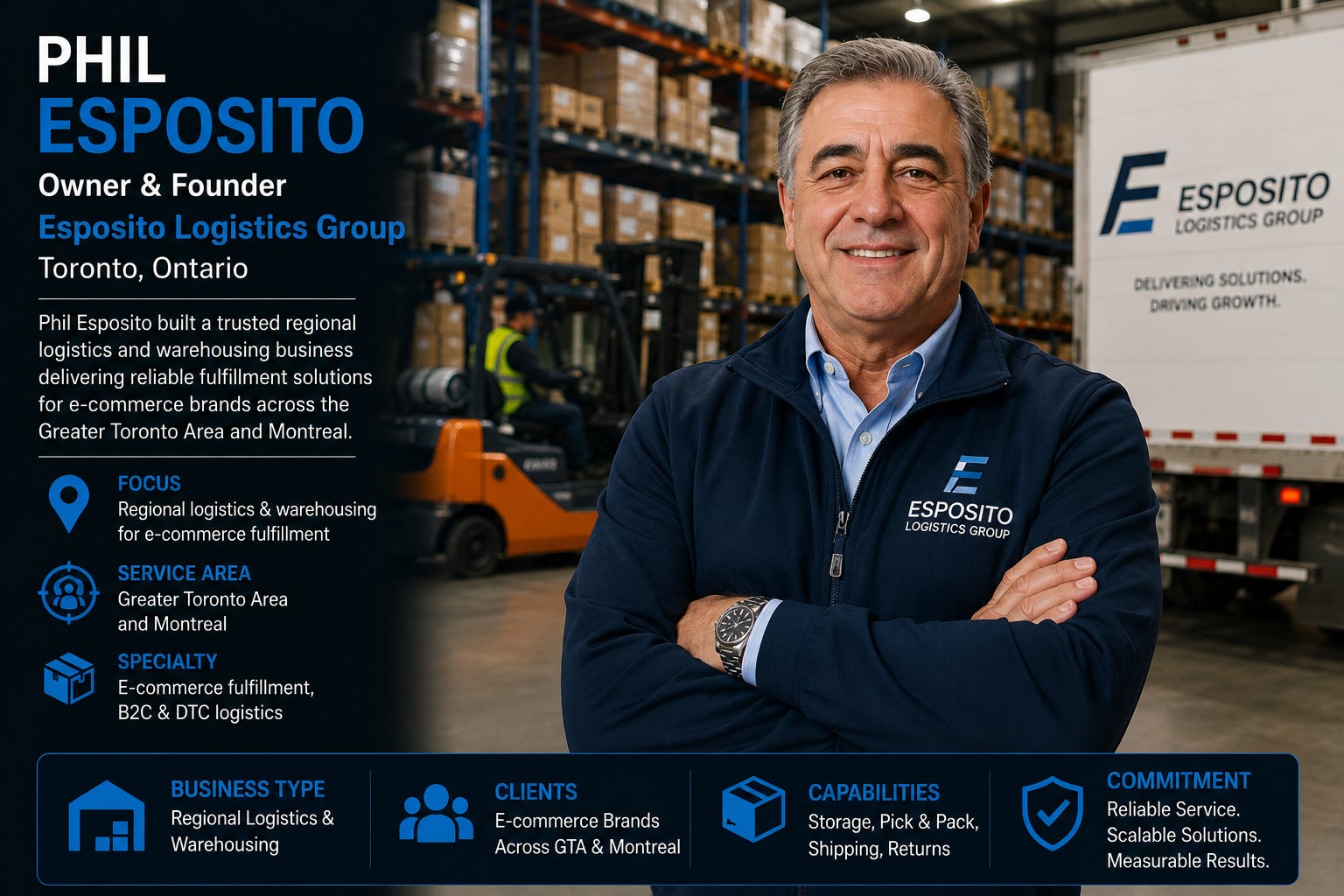
Phil Esposito, age 61, owned Esposito Logistics Group, a Toronto-based regional logistics and warehousing business serving e-commerce fulfillment clients across the Greater Toronto Area and Montreal. The business generated $58M in revenue and $9.4M in normalized EBITDA across three warehouse facilities totaling 380,000 square feet.
Phil had received an unsolicited offer six months earlier from a large strategic acquirer at $38M, representing 4x EBITDA. His financial advisor convinced him to reject the offer and engage an experienced M&A advisor to run a proper competitive process. The advisor’s prediction was bold, “We can extract $48M to $52M through controlled competition in eight weeks.”
Phil was skeptical but committed.
Weeks 1-2: Intelligence and Preparation
The advisor identified eight qualified buyers across four categories.
Three strategic buyers, regional logistics consolidators looking to expand
Two financial buyers, private equity firms with logistics platform investments
One search fund partnership focused on logistics platforms
Two institutional buyers, infrastructure-style capital seeking warehouse exposure
The team spent two weeks building the Confidential Information Memorandum, preparing buyer-specific presentations highlighting different value drivers for each category, and developing a synergy quantification model showing what each buyer category could capture beyond standalone value.
Weeks 3-4: Controlled Marketing
Outreach began with carefully tailored messaging to each buyer category.
Strategic buyers received messaging emphasizing “rare GTA logistics footprint, defensive positioning available”
Financial buyers received “operational platform with documented systems, ready for scale through bolt-on acquisitions”
Search fund received “career-defining logistics platform with seller succession support”
Institutional buyers received “stable cash flows from contractual customer commitments, infrastructure characteristics”
Six of the eight buyers signed Non-Disclosure Agreements within ten days. Initial indications of interest ranged from $40M to $46M.
Weeks 5-6: Creating Urgency
This phase was where the strategy paid off. Formal Letters of Intent were requested by a specific date, with explicit messaging that the seller would advance the top three bidders to management presentations and final negotiations.
The urgency-creation messaging was honest but powerful.
“Multiple parties are advancing to final rounds”
“We are making a final selection by [specific date in three weeks]”
“Best and final offers required from selected finalists”
Five of six buyers submitted LOIs. The range moved from $40M-$46M to $44M-$49M. The competitive dynamic had begun.
Three finalists were selected.
Strategic Buyer A: $47M LOI, 75% cash
Strategic Buyer B: $46M LOI, 80% cash
Financial Buyer: $49M LOI, 70% cash with rollover equity option
Weeks 7-8: Extracting Maximum Value
The final two weeks compressed everything into best-and-final extraction. Each finalist received a structured request for their highest and best offers, with explicit bundling of price, payment structure, and closing certainty.
The advisor’s communication to all three finalists was identical. “We have three strong offers. We are prioritizing closing certainty alongside price. Bundle your best terms together. We will select within seven days.”
Final offers came back transformed by competitive pressure.
Strategic Buyer A: $49M, 85% cash at closing, 60-day close
Strategic Buyer B: $48.5M, 90% cash at closing, 45-day close
Financial Buyer: $51M, 75% cash at closing, 90-day close with rollover
Phil’s analysis went beyond headline price. He calculated actual cash at closing.
Strategic A: $41.65M cash immediately
Strategic B: $43.65M cash immediately
Financial: $38.25M cash immediately
Phil selected Strategic Buyer B at $48.5M with 90% cash at closing and a 45-day close. The reasoning was disciplined. The highest headline price ($51M from the financial buyer) delivered $5.4M less cash at closing than the second-highest headline price ($48.5M strategic). Closing certainty was also higher with the strategic buyer who had completed three similar acquisitions in the prior 24 months.
The Outcome
