

Multiple Choice Questions (10)
1. Individual buyers typically pay premium prices because they prioritize: a) Aggressive financial returns b) Lifestyle fit, geographic match, and emotional alignment c) Quarterly performance metrics d) Bolt-on acquisition potential
2. Family buyers differ from financial buyers primarily in: a) Their willingness to pay headline prices b) Their decision timelines and generational hold horizons c) Their preference for earnout structures d) Their reliance on debt financing
3. Turnaround buyers will pay premium prices only when: a) The business has stable historic performance b) They see clear, fast paths to dramatic improvement c) The seller offers extensive financing d) The business has institutional-quality governance
4. Search fund buyers typically hold businesses for: a) 1 to 2 years b) 3 to 7 years like private equity c) 5 to 15 years d) 20-plus years
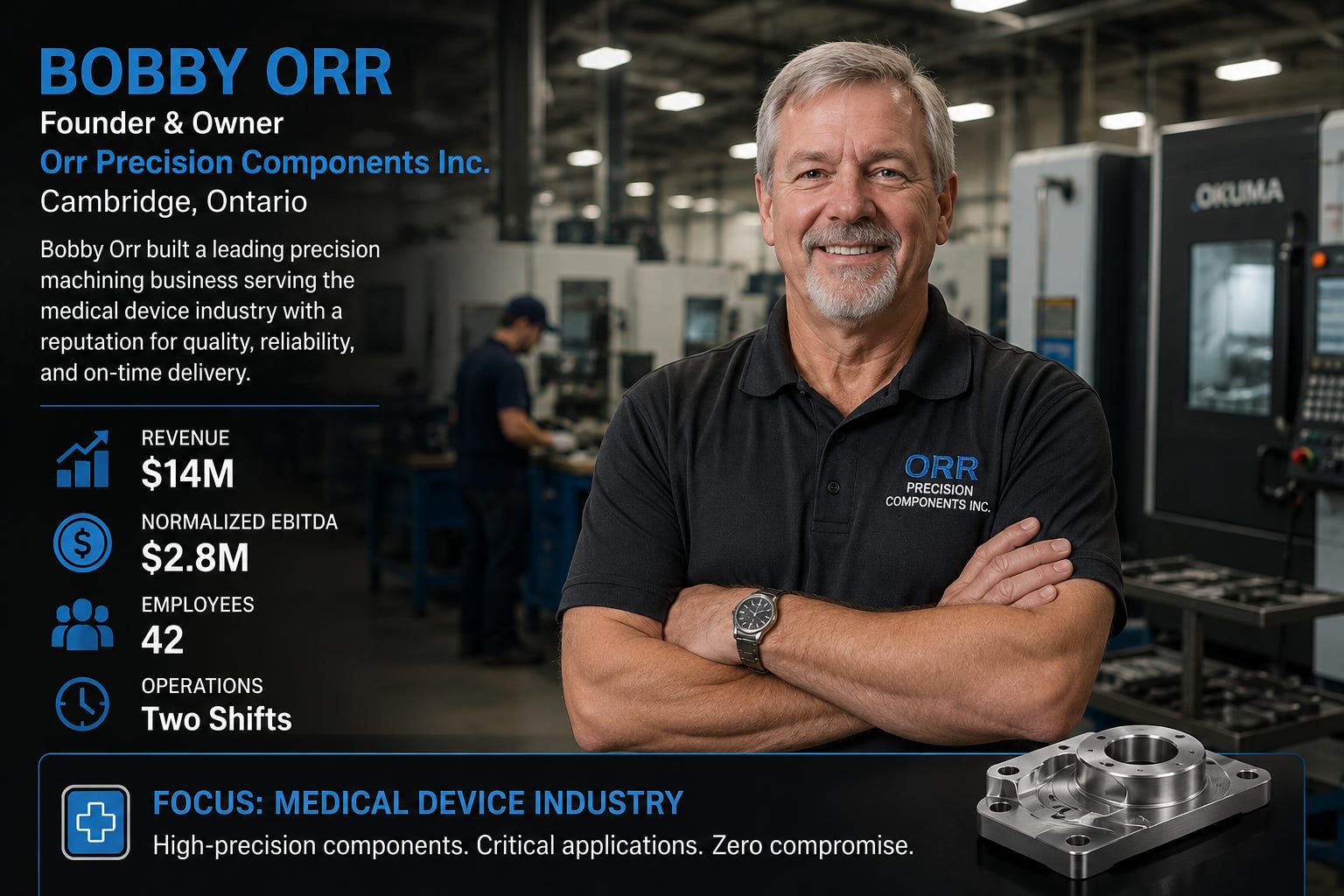
5. In the Bobby Orr case study, which buyer ultimately won the deal? a) The individual buyer David from Munich b) The Thompson Family Office c) The search fund led by Margaret d) The private equity buyer
6. Institutional buyers prefer assets that are: a) High-growth with aggressive expansion potential b) Distressed with turnaround opportunity c) Boring, predictable, and well-governed d) Pre-revenue with disruptive technology
7. True or False: Search fund buyers become the operating CEO of the acquired business rather than installing professional management. a) True b) False
8. The Thompson Family Office offer in the Bobby Orr case was structured as: a) 100% cash at closing b) 50% cash, 50% earnout c) 70% cash, 30% seller note d) Pure stock consideration
9. Individual buyers, family offices, and search funds collectively represent approximately what percentage of lower-middle-market M&A volume? a) Less than 10% b) Roughly 25% c) More than 40% d) More than 80%
10. True or False: Family buyers typically make decisions faster than other buyer types because family relationships simplify the process. a) True b) False
Explanation Questions (5)
1. Explain why individual buyers can sometimes pay premium prices that financial buyers will not match. Use specific examples from the Bobby Orr case study to illustrate the emotional drivers behind individual buyer decisions.
2. Describe the key differences between search fund buyers and traditional private equity firms. How do these differences create unique advantages for sellers seeking succession solutions?
3. Why does Chapter 13 emphasize that institutional buyers want “boring” assets? Describe the specific characteristics that make a business appealing to institutional capital and explain why predictability justifies premium multiples.
4. Explain why Bobby Orr chose the Thompson Family Office offer at $13.2M over the individual buyer David’s higher offer of $13.5M. What lessons does this teach about evaluating deal structure beyond headline price?
5. Compare and contrast the motivations of family buyers and turnaround buyers. How do their completely different timeframes and risk appetites create distinct premium pricing opportunities, and what type of business fits each category best?
Answer Key — Post 2 Quiz
Multiple Choice Answers:
B — Individual buyers prioritize lifestyle fit, geographic match, and emotional alignment.
B — Family buyers operate on generational hold horizons of 20-plus years versus PE’s 3 to 7 years.
B — Turnaround buyers pay premium only when they see clear, fast paths to dramatic improvement.
C — Search fund buyers hold for 5 to 15 years, longer than typical PE.
B — The Thompson Family Office won at $13.2M with 100% cash at closing.
C — Institutional buyers want boring, predictable, well-governed assets matching long-term liabilities.
A — True. Search fund buyers become operating CEOs personally, unlike PE which installs management.
A — The Thompson Family Office offer was 100% cash at closing with optional consulting agreement.
C — These three buyer categories collectively represent more than 40% of lower-middle-market M&A volume.
B — False. Family decisions are slower but more relational due to family dynamics and generational considerations.
Explanation Question Answers:
1. Individual buyers can pay premium prices because they are buying identity, purpose, and lifestyle, not optimizing financial returns. Financial buyers are constrained by their models, return thresholds, and investor mandates. Individual buyers like David from Munich in the Bobby Orr case are constrained by personal goals that translate to emotional willingness to pay above rational financial limits. David offered $13.5M with 90% cash because the alternative was not buying any business at all, and the business gave him professional purpose, geographic fit for his family, and an industry he loved. The premium was emotional, not financial, but the cash was real. Individual buyers backed by SBA-equivalent acquisition financing can compete aggressively for businesses that fit their personal criteria.
2. Search fund buyers differ from traditional private equity firms in four critical dimensions. First, hold periods are 5 to 15 years versus PE’s 3 to 7 years, providing patient capital without quarterly pressure. Second, the buyer becomes the operating CEO personally rather than installing professional management, providing direct succession. Third, success is deeply personal as a career-defining opportunity rather than one of many portfolio investments. Fourth, capital is patient with no fund-level liquidity pressure. These differences create unique advantages for sellers seeking succession solutions because the seller can transition to an advisory role with a hands-on successor who is personally invested in long-term continuity, rather than handing the business to professional managers focused on rapid value creation for portfolio exit.
3. Institutional buyers (pension funds, insurance companies, large endowments) manage other people’s money with multi-decade liabilities. They need predictable cash flows matching pension obligations or insurance reserves over 10 to 20 year horizons. Predictability trumps performance because volatility creates liability matching problems, not opportunity. Characteristics that appeal to institutional capital include sustainable performance with 10-plus year track records, strong governance systems and board oversight, long-term leases and contractual revenue commitments, diversified revenue streams with low customer concentration, and experienced management teams that function autonomously. Predictability justifies premium multiples because institutional buyers are paying for liability-matching stability, which is genuinely scarce in the M&A market and worth premium pricing to capture.
4. Bobby Orr chose the Thompson Family Office offer at $13.2M with 100% cash over David’s $13.5M with 90% cash because actual cash at closing favored the Thompson offer ($13.2M immediate cash versus David’s $12.15M cash at closing). The $300K headline difference disappeared when comparing actual proceeds, and the Thompson offer eliminated the $1.05M held back as an earnout or holdback in the David offer. The Thompson family also committed to retaining Bobby’s entire workforce, which mattered enormously to him personally. The lesson is that headline price is often misleading and sellers must calculate actual cash at closing, including the time value of money on delayed payments, the risk of earnout adjustments, and the probability of holdback releases. Deal structure determines real proceeds more than headline pricing.
5. Family buyers and turnaround buyers operate on completely opposite timeframes and risk appetites, creating distinct premium pricing opportunities. Family buyers think generationally with 20 to 30 year hold horizons, emphasizing cultural fit, legacy preservation, and relationship-based dealings over financial optimization. They pay premium for businesses with strong cultural alignment, sustainable operations, and legacy potential. Turnaround buyers operate on rapid timelines with 18 to 36 month value creation windows, demanding brutal honesty during due diligence and clear quantified improvement paths. They pay premium only when they see fast execution potential and quick wins available within 90 days. Family buyers fit stable businesses with strong brands and community ties. Turnaround buyers fit distressed businesses with identifiable operational fixes and underleveraged assets. Sellers who understand which category fits their business profile can target outreach and positioning to maximize premium capture from the right buyer.