

Welcome to 2026, where AI agents are not theoretical they are working. PwC calls this the year when agents shine. Small businesses report 30-90 day payback on focused deployments. Yet 75% still fail. The difference? They automated broken processes instead of fixing them first. Here is what actually works right now based on January 2026 data
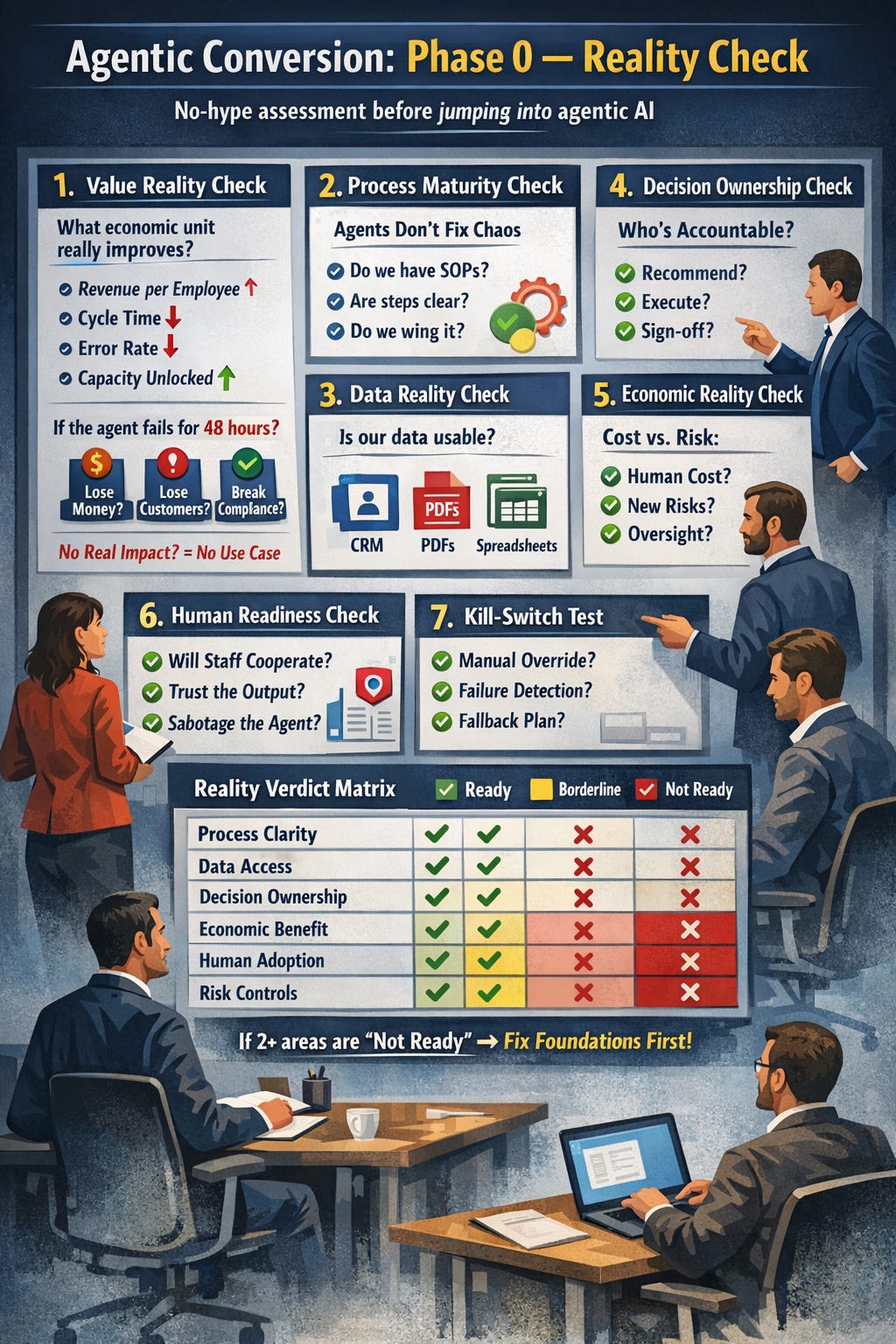
10 KEY TAKEAWAYS - AI AGENT IMPLEMENTATION 2026
1. 2026 is the inflection point: PwC research confirms agents moved from experimental to production-ready with proven benchmarks.
2. 80% of enterprise apps embed agents: IDC reports agents became standard features by 2026 not optional add-ons for small businesses.
3. 5-10x ROI is achievable: Real businesses report these returns within 90 days when following specific deployment patterns.
4. The 80/20 rule dominates: Technology delivers only 20% of value workflow redesign delivers the other 80% of AI benefits.
5. 30-90 day payback window: Well-deployed agents pay for themselves in weeks not years like traditional software investments.
6. 60-80% of failures trace to data: Poor data quality not technology limitations causes most AI agent projects to fail.
7. Customer service equals highest ROI: 70% response time reductions and $80 billion in savings make support the obvious starting point.
8. Start Level 1 scale to Level 3: Begin with assistive copilots prove value then advance to operational and autonomous agents.
9. Model Context Protocol changed everything: MCP became the standard in January 2026 connecting agents to real business systems.
10. Governance equals competitive advantage: Winners built governance frameworks before deploying autonomous systems not after.
READING PREREQUISITES
This is Post 1 of a 12-part series on AI agent implementation for small businesses in 2026. No prior reading required this post establishes the foundation. Each subsequent post builds on concepts introduced here progressing from strategy to tactical deployment to advanced orchestration.
Recommended Prior Reading:
· None - Start here
Why January 2026 Changed Everything
Something fundamental shifted between December 2025 and January 2026. It was not a single breakthrough it was the convergence of three developments that moved AI agents from interesting demos to production workers.
First the Model Context Protocol (MCP) became the industry standard. OpenAI Microsoft and Google all adopted it which means agents can now access your actual business systems your CRM email databases instead of being stuck in isolated test environments. Industry experts describe MCP as USB-C for AI suddenly everything connects.
Second real-world benchmarks replaced vendor promises. PwC 2026 research found that successful deployments share a specific pattern: They have concrete benchmarks tracking P&L impact operational differentiation or workforce metrics. The question shifted from How many tasks can AI do to How much money did it save or make
Third the 80/20 rule got proven at scale. Here is the counterintuitive finding that separates winners from failures: Technology delivers only about 20% of an AI initiative value. The other 80% comes from redesigning workflows. This is why businesses winning in 2026 are not the ones with the fanciest AI they are the ones that fixed their broken processes first then automated them.
The Numbers That Actually Matter
Let me cut through the hype with current January 2026 data from actual small business deployments:
Market Adoption:
· IDC reports 80% of enterprise workplace applications now embed AI agents
· Gartner predicts 40% of enterprise apps will include task-specific agents by end of 2026
· 56% of customer support interactions already involve agentic AI
· Small business adoption jumped from 36% in 2023 to 57% in 2026
ROI Reality:
· 5-10x returns reported by small businesses on focused deployments
· 30-90 day payback for workflows saving 5+ hours weekly
· $80 billion in projected contact center cost reductions globally
· 70% reduction in customer response times for simple inquiries
· 25% reduction in overall customer service costs
Failure Analysis:
· 60-80% of AI agent failures trace to poor data quality
· Fewer than 25% of organizations successfully scale agents to production
· McKinsey reports high performers are 3x more likely to scale than peers
· Organizations treating agents as productivity add-ons consistently fail
The Three Deployment Patterns: Winners vs Failures
After analyzing dozens of January 2026 case studies three distinct patterns emerged. Here is what separates the businesses achieving 5-10x returns from the 75% who abandoned their deployments:
