


Your data room is not a filing cabinet. It is the most powerful weapon in your M&A arsenal, and most business owners waste it completely. While you dump documents and hope buyers find the value, sophisticated sellers use their data room to control the narrative, build urgency, and engineer the conditions where buyers compete to pay premium prices. Which approach are you taking?
10 KEY TAKEAWAYS, THE STRATEGIC DATA ROOM
Data rooms tell stories: Professional sellers design every document to support a valuation thesis and address buyer concerns before they become deal-killers.
Progressive disclosure creates competition: You don’t reveal everything at once. Strategic information release keeps multiple buyers engaged and creates genuine competitive tension.
Documentation eliminates Operational Ambiguity Risk: Chapter 2’s core risk is that poor documentation creates the perception of danger even when actual operations are sound. Your data room cures this.
Trojan Horse documents add hidden value: Smart sellers embed information that reveals strategic value lazy buyers miss, triggering premium pricing from thorough acquirers.
Preemptive documentation kills deal-killers: You anticipate every buyer concern and address it proactively, eliminating objections before they become negotiating leverage against you.
Founder documentation enables buyer intelligence: If critical business knowledge exists only in your head, buyers cannot become the informed parties FMV requires, and your valuation suffers directly.
The controlled auction requires information architecture: Managing competitive tension across multiple bidders depends on a carefully sequenced information release strategy.
Due diligence goes both ways: Most vendors only prepare for buyer scrutiny. Smart sellers simultaneously conduct forensic due diligence on every potential acquirer.
Quality of documentation signals quality of operations: A professionally organized virtual data room reduces buyers’ perceived risk and increases their willingness to pay.
Information architecture is exit architecture: How you build and structure your business documentation over the years before a sale directly determines the price you achieve on exit day.
📚 READING PREREQUISITES
Each post in this series builds on the technical groundwork laid in earlier entries. Key valuation concepts are intentionally revisited and reinforced across multiple posts to ensure retention and to demonstrate how foundational ideas interconnect at every stage of the exit process.
Recommended Prior Reading:
Why Your Data Room Is Currently Losing You Money
The virtual data room has become the central battlefield of modern M&A transactions. It is where deals are won or lost, where buyer enthusiasm is built or destroyed, and where your valuation thesis is either reinforced or undermined with every document a buyer opens.
Most business owners approach data room preparation the same way they approach a tax audit: find the relevant documents, organize them reasonably well, and hope the other side accepts them. This passive, reactive approach is the single most common cause of undervaluation in privately negotiated transactions.
Chapter 2’s Operational Ambiguity Risk is directly addressed, or directly created, by your data room strategy. Poor, incomplete, or disorganized documentation does not just inconvenience buyers. It signals that operations are ambiguous, management is undisciplined, and risk is higher than the financials suggest. Buyers respond to perceived risk by lowering their offer or walking away entirely.
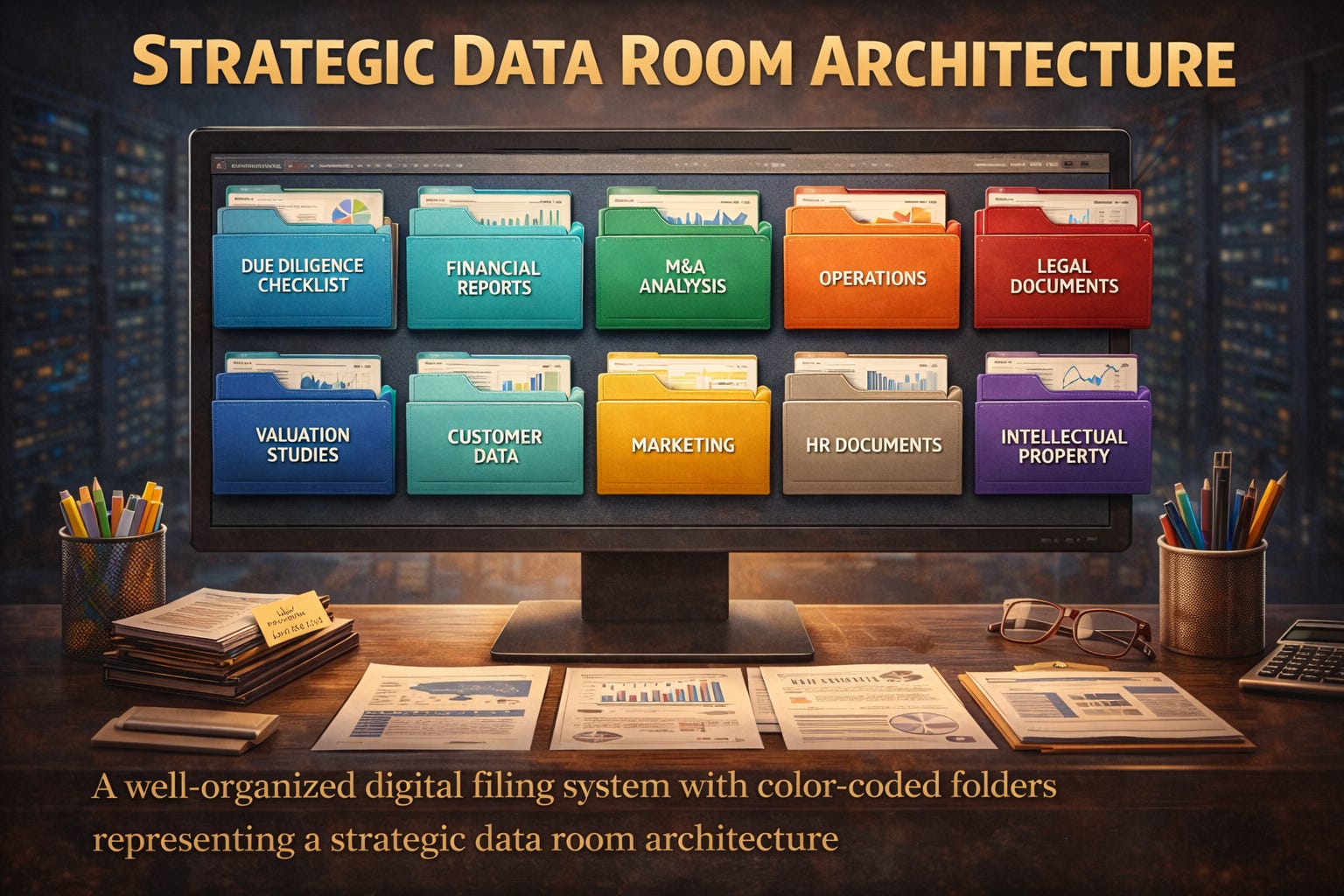
The Three Data Room Weapons
The Progressive Disclosure Strategy is the foundation of a competitive M&A process. You begin with high-level metrics and strategic narrative to establish baseline interest and qualify buyers. You reveal detailed operational data only to parties demonstrating serious intent. You provide granular financial models and customer-level data only to finalists under exclusivity or letter of intent.
